
Why Being Prepared Matters More Than Ever
NHS cardiac appointments are under pressure. Learn why preparing for your cardiology or cardiac surgery consultation can help you feel calmer, clearer and better heard.
Waiting for a Cardiac Consultation? Why Being Prepared Matters More Than Ever
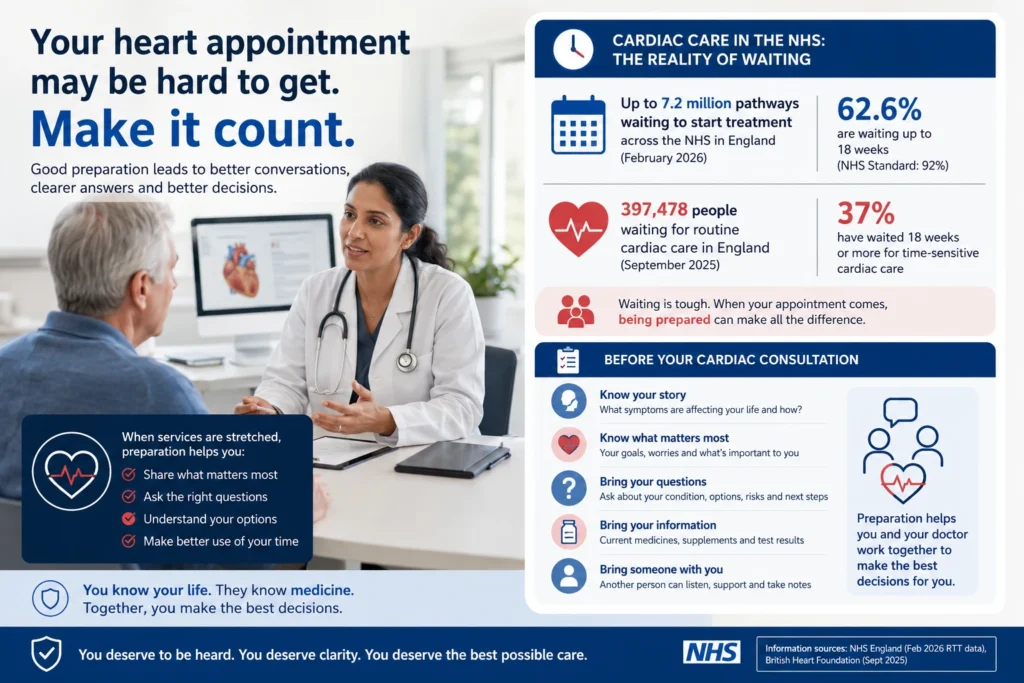
Waiting for a heart appointment can feel unsettling. You may have symptoms. You may have had a scan, test result or referral letter. You may already know that something is not quite right, but still be waiting to understand what it means.
Across the NHS, cardiac care remains under real pressure. In England, the NHS Constitution sets out that patients should wait no longer than 18 weeks from GP referral to consultant-led treatment for non-urgent care. Yet NHS England’s February 2026 referral-to-treatment data showed around 7.2 million pathways waiting to start treatment, with only 62.6% waiting up to 18 weeks — well below the 92% standard.
For heart patients specifically, the British Heart Foundation reported that 397,478 people were waiting for routine cardiac care in England at the end of September 2025, with 37% waiting 18 weeks or more for what it describes as time-sensitive cardiac care.
These figures are not shared to frighten you. They are shared because they make one thing clear: when your appointment arrives, it matters.

A short consultation can carry a lot of weight
A cardiac consultation may need to cover symptoms, test results, risk, treatment options, lifestyle, medication, possible procedures, follow-up plans and your own worries. That is a lot to fit into a short appointment.
It is easy to walk in with a head full of questions and walk out remembering only half of what was said.
That is why preparation is not “being difficult”. It is sensible. It is respectful of your own time, your clinician’s time and the seriousness of the conversation.
NHS My Planned Care advises patients to think before an appointment about the questions they want to ask and what matters most to them in daily life — such as getting back to work, managing at home or caring for someone else. It also suggests making a list to take with you.
This is exactly what MyCareQuestions is built to help you do.
Good preparation is already encouraged by the NHS and medical bodies
The idea of preparing for a consultation is not new or unusual. It is part of modern healthcare.
NICE describes shared decision-making as a process where a healthcare professional and patient work together to make decisions based on clinical evidence and the person’s preferences, beliefs and values. NICE also recommends prompting patients to ask questions such as: “What are my options?”, “What are the possible benefits and risks?” and “How can we make a decision together that is right for me?”
The General Medical Council says doctors must try to find out what matters to patients so they can share relevant information about benefits, harms and reasonable alternatives.
Many NHS trusts also advise patients to bring a list of questions and a list of current medicines and supplements to outpatient appointments.
So, preparation is not a nuisance. It is part of better care.
What should you prepare before a cardiac consultation?
You do not need to become a medical expert. You do not need to diagnose yourself. You do not need to arrive with a folder full of internet printouts.
What helps most is clarity.
Before your appointment, try to think about:
What symptoms are affecting your life?
For example: breathlessness, chest discomfort, palpitations, dizziness, tiredness, swollen ankles, reduced exercise tolerance or anxiety about activity.
What has changed?
Can you still walk the dog, climb stairs, play golf, work, garden, shop, sleep or travel as you used to?
What matters most to you?
This may be staying independent, looking after a partner, getting back to work, avoiding hospital if possible, being well enough for a family event, or understanding whether travel is sensible.
What are you most worried about?
Some people worry about dying suddenly. Others worry about surgery, medication, losing independence, being dismissed, or not knowing when to seek urgent help.
What do you need explained clearly?
You may want to understand your diagnosis, your test results, whether your condition is mild or serious, what happens next, what warning signs to watch for, and when you should ask for help sooner.
The consultation is not just about your heart. It is about your life.
A busy cardiologist or cardiac surgeon may understand your scan quickly. What they cannot always know quickly is who you are.
They may not know that you are caring for your wife. That you have a walking holiday booked. That you are frightened because your father died young of heart disease. That you want to keep working. That you are not afraid of treatment, but you are afraid of uncertainty.
These details matter because they help your doctor explain things in a way that fits your life.
This is where MyCareQuestions can help.
MCQ helps you turn your story, concerns and priorities into a clear, concise MyLife Summary. It is designed to help your clinician understand what matters to you before or during the consultation, without replacing medical advice or trying to tell you what treatment you should have.
Prepared patients ask better questions
One useful approach is sometimes called BRAN:
Benefits — What are the benefits of each option?
Risks — What are the risks or downsides?
Alternatives — What other options are available?
Nothing — What happens if we do nothing for now?
The Patients Association promotes this type of question-led approach to support shared decision-making.
For cardiac patients, helpful questions might include:
“What do my test results suggest is happening?”
“Is this something we monitor, treat with medication, investigate further, or refer for a procedure?”
“What symptoms should make me seek urgent help?”
“What should I avoid or continue doing while I wait?”
“What are the possible next steps, and how quickly should they happen?”
“What matters in deciding between the available options?”
“Can I bring someone with me or share a written summary of what matters to me?”
NHS scarcity makes preparation even more important
Nobody wants a healthcare system where patients feel they must fight to be heard. But when services are stretched, preparation becomes a practical form of self-advocacy.
It helps you:
- remember the key points you want to raise
- explain how symptoms affect your actual life
- reduce the chance of leaving with unanswered questions
- support shared decision-making
- make better use of limited consultation time
- feel calmer and more in control
Most importantly, preparation helps your doctor help you.
How MCQ supports you
MyCareQuestions is designed for patients preparing for important healthcare conversations. For cardiac patients, it helps you organise your thoughts before seeing a cardiologist or cardiac surgeon.
It does not diagnose you.
It does not recommend treatment.
It does not replace your doctor.
It helps you prepare.
Our MCQ clinical panel believes that patients deserve to arrive at important cardiac consultations feeling informed, calm and ready to explain what matters most.
Because in a stretched NHS, every consultation counts.
And when the appointment finally comes, you deserve to be seen, heard and understood.
Prepare your MyLife Summary with MyCareQuestions before your cardiac consultation.