
They can be useful tools. They can explain a medical term, help you organise a thought, or suggest questions to consider.
But they do not know what matters most in a real consultation.
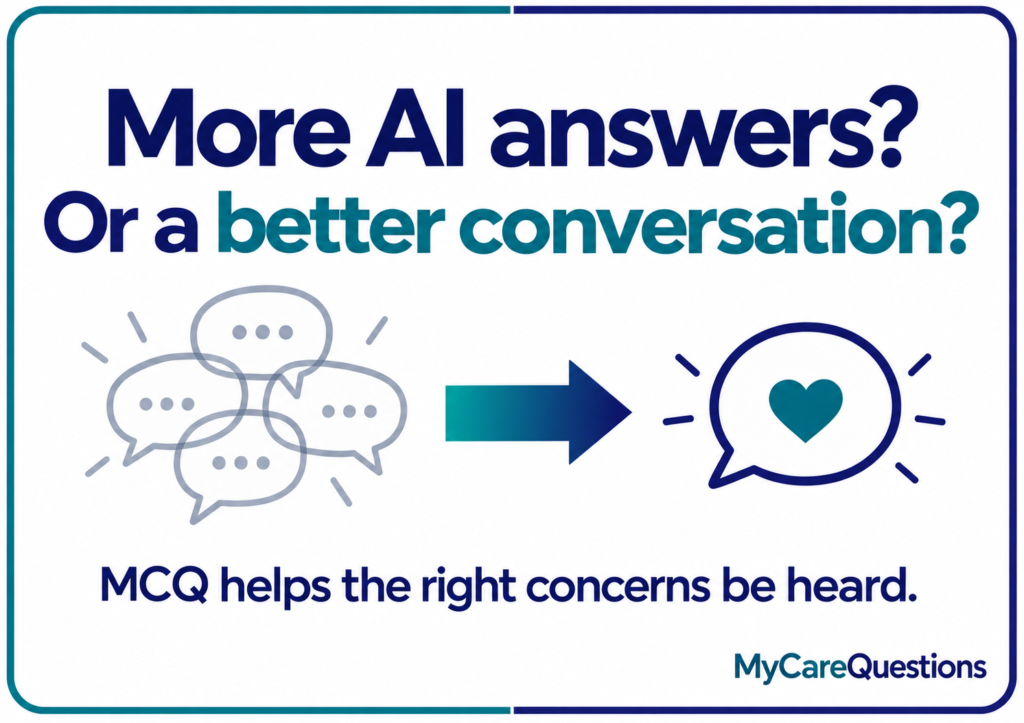
Generic AI can easily create a long list of questions, more information, and sometimes more anxiety. It cannot reliably distinguish between what is interesting and what will genuinely help your medical team understand you – your symptoms, concerns, daily life, priorities and readiness for treatment.
We have also seen how lengthy, unfocused AI printouts can make an appointment harder, rather than easier. They may be interesting, contradictory or disconnected from the reason you have been referred. With limited consultation time, clinical colleagues need clear, relevant context – not pages of general information that obscure what matters most to you.
MyCareQuestions is different.
Our questions are carefully curated by experienced clinicians. They are designed to draw out the information other clinicians need to know, without turning an appointment into a confrontation or asking you to become your own doctor.
The aim is not to second-guess your medical team. It is to help you arrive prepared to have a better conversation with them: clear about what matters, able to raise concerns, and ready to ask the questions that may shape the next step in your care.
In today’s NHS, where time is limited and pathways can be complex, being understood early matters. A well-prepared patient can help the right concerns surface at the right time – supporting clearer decisions, fewer missed opportunities and a better chance of returning to the life they love, rather than simply learning to live around illness.
Use AI by all means – whether that is ChatGPT, Claude or another tool. The important thing is not which tool you use. It is arriving prepared, with sound questions and a clear picture of what matters to you.
If you do want to use AI, we’d suggest following these MCQ rules
1. Start with your appointment. Tell AI what kind of appointment you have, who you are seeing and what you want to get from it.
2. Lead with your real concern. Do not begin with the diagnosis you fear or hope for; describe what has changed and what is worrying you.
3. Give the facts, not a long story. Include symptoms, timing, medicines, tests and relevant medical history. Say clearly when you are unsure.
4. Ask it to help you prepare questions, not to diagnose you or decide your treatment.
5. Ask for a short list. Three to five clear questions are more useful than several pages of possibilities. Ensure you check any questions with the relevant clinical guidelines to make sure you don’t miss out on the most appropriate options.
6. Keep the focus on your life. Include what you are struggling to do, what you want to get back to and what matters most to you.
7. Check anything important. AI can sound confident when it is wrong. Use trusted NHS, charity or professional-body sources for facts that affect your decisions.
8. Never change medication, delay urgent help or make a treatment decision because an AI tool suggested it.
9. Protect your privacy. Avoid sharing information you would not be comfortable putting into an online service, especially identifying details or documents unless you understand how they will be handled.
10. Take a one-page summary, not a dossier. Bring your key concerns and questions, then let the conversation with your clinician do its job.
MyCareQuestions is here to support you and your medical team. Our clinician-curated prompts help make the limited time you have together count: bringing forward the concerns, circumstances and questions that can help your team consider your care clearly and make the best decisions with you.
MyCareQuestions supports preparation and communication; it does not provide medical advice, diagnosis or treatment recommendations. Your clinical team remains responsible for your care.
Written by the MyCareQuestions clinician collective.
www.mycarequestions.com