
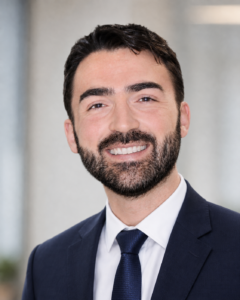
David Rose, MD, MBBS, PhD
Spire Manchester Hospital, Circle Health Group, Alexandra Hospital Manchester, Lancashire Cardiac Centre, Blackpool Victoria Hospital| Primary Specialty | Cardiothoracic Surgery / Cardiac Surgery |
|---|---|
| Secondary Specialties |
About Me
I am a Consultant Cardiac Surgeon with a specialist focus on minimally invasive mitral and aortic valve surgery, coronary artery bypass grafting—particularly total arterial revascularisation—and aortic surgery. My practice is centred on delivering durable, high-quality outcomes while reducing the impact of surgery through less invasive approaches where appropriate.
I trained in cardiac surgery at the University of Rome La Sapienza, graduating with honours and completing both advanced surgical training and a PhD in cardio-thoracic pathophysiology and imaging. During this time, I developed a strong interest in minimally invasive valve surgery and undertook dedicated fellowship training to refine these techniques. I have been a Consultant Cardiac Surgeon at Blackpool Victoria Hospital since 2017, where I also serve as Clinical Lead and Head of Department.
My approach is to provide clear, honest, and individualised advice. I believe patients should fully understand their condition, the available treatment options, and the long-term implications of each decision. Wherever appropriate, I support multidisciplinary discussion and second opinions to ensure that every patient receives the most balanced and evidence-based recommendation.
I speak English and Italian fluently.
Outside of surgery, I enjoy sport, skiing, and travelling, and I value time with my family as a father of two.
Ready for Your Specialist Consultation?
Generate a personalized, clinical summary PDF to guide your next doctor's visit.
My Clinical Interests
Minimally invasive Heart valve surgery (mitral and aortic)
Advanced coronary artery by-pass surgery with total arterial revascularisation
Complex Aortic Surgery
Mission Statement
I support the MyCareQuestions movement because informed patients make better decisions and experience better outcomes. In cardiac surgery, choices are often complex and involve balancing risks, timing, and long-term implications. Encouraging patients to ask the right questions helps them understand not only what is being recommended, but why.
I believe that a consultation should be a two-way conversation, where patients feel confident to explore alternatives, seek clarity, and, when appropriate, request a second opinion or multidisciplinary review. This level of transparency builds trust and leads to more personalised and thoughtful care.
Movements like MyCareQuestions help shift the culture from passive acceptance to active participation, which ultimately improves both the quality of decisions and the patient experience.
What I think a good consulation looks like
A good consultation is clear, structured, and centred on the individual patient. My aim is that you leave with a full understanding of your condition, the reasons for treatment (or observation), and the options available—including their risks, benefits, and long-term implications. I will explain not only what I recommend, but why, and how this fits with your overall health and priorities.
We will discuss timing of intervention, expected recovery, and realistic outcomes. Where appropriate, I encourage multidisciplinary team discussion and second opinions, particularly for complex decisions, so that you can feel confident that all perspectives have been considered.
Equally important, a good consultation allows space for your questions and concerns. The goal is that you feel informed, reassured, and able to make a decision that is right for you, supported by clear advice and transparent communication.
Questions I Ask During Consultations
General Questions
- Do I actually need an intervention now, or is it safe to wait?
- What are the risks of waiting versus operating at this stage?
- What are my treatment options, and why are you recommending this one for me? (TAVI VS SURGERY)
- What are my options—surgery, transcatheter treatment, or monitoring—and why is one better for me?
- Am I suitable for a minimally invasive operation, and how would that change my recovery?
- Am I a candidate for a minimally invasive approach, and what difference would it make to my recovery?
- What are the real risks in my specific case—not just average numbers?
- How durable is this operation or valve choice over the long term?
- For coronary disease, would I benefit from total arterial revascularisation rather than standard bypass?
- What will my quality of life look like after surgery, and how quickly can I return to normal activities or work?
- If I choose a less invasive or transcatheter option, what might I be giving up in terms of durability or outcomes?
- How many procedures like mine do you perform, and does experience affect outcomes?
- What happens if I do nothing, and what signs should prompt urgent review?
- Which valve option is best for me (repair vs replacement, tissue vs mechanical), and how long will it last?
- What will recovery look like, and how quickly can I return to normal life or work?
- If I choose a less invasive or transcatheter option, what might I be compromising in the long term?
My Leadership Roles
Head Of Service: Cardiothoracic Surgery
Ready for Your Specialist Consultation?
Generate a personalized, clinical summary PDF to guide your next doctor's visit.
My Personal Hobbies
Travel and experiencing different cultures
Sport, fitness, and outdoor activities
Supporting patient education and cardiac health awareness initiatives
Additional Information
Locations
- Manchester, Greater Manchester, England
- Stockport, Greater Manchester, England
Languages
- ENGLISH
- ITALIAN
Education
- MBBS, Bachelor of medicine, Bachelor of Surgery
- Speciality Training in Cardiac Surgery (honors)
- Doctor of Philosopy, PhD Angio-Cardio-Thoracic pathophysiology and imaging
- Postgraduate Degree, clincal practice, management and education
